top of page

Extreme Heat

Longer, more frequent, and more severe extreme heat events are expected to occur in Santa Clara County. The County is projected to experience higher annual maximum temperatures that could reach 108-112°F by mid-century and greater than 112°F by late-century.

Nature-based Physical Interventions

Mycoremediation (Emerging Solution)

Mycoremediation is a nature-based technique for restoring contaminated land, using fungi and native plants to break down toxins like petroleum, plastics, and pesticides into less toxic chemicals.

Urban Forest

Urban forests are planted tree communities of native or ecologically suited trees throughout cities that reduce urban heat and flooding risks, among other benefits.

Creek Daylighting

Daylighting refers to removing obstructions from rivers, streams, and creeks to allow water to flow naturally, creating greater storage capacity during flooding events.

Green Roofs

Green roofs are added green spaces, including plants, grasses, gardens, and potentially small farms, to the top or sides of buildings to decrease flooding and urban heat.

Depaving

Depaving is the process of removing pavement materials like concrete and replacing them with vegetation or permeable pavement materials to address a variety of climate hazards.

Rain Garden

Rain gardens are shallow to deep depressions filled with flood resistant, native plants that detain, slow, and filter stormwater runoff.

Constructed Inland Wetlands

Constructing or restoring wetlands aims to recreate natural wetlands in an urban environment, which provides flood mitigation and water purification.

Increasing River Floodplain

Increasing riverine floodplains refers to restructuring river banks to their more natural form in order to mitigate flooding.

Green Parking Lots

Green parking lots utilize a variety of techniques, including permeable pavement and bioswales, to reduce stormwater runoff.

Bioswale

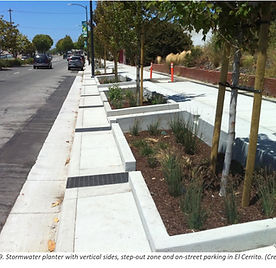
Bioswales are long, depressed areas filled with flood resistant, native plants, rocks and layers of soil that decrease stormwater velocity and allow for groundwater infiltration and filtration

Stormwater Tree Pits

A stormwater tree pit is dug into the sidewalk adjacent to a street and a tree is planted to absorb and filter storm runoff and flooding.

Examples

Pampas Flower

Urban Forest “Vision Solano”

Sustainable Solano's Urban Forest “Vision Solano” project aims to green Solano County with trees and plants that support diverse ecosystems and provide shade, food, and habitat for wildlife. For this project, Sustainable Solano planted 60 trees in 2018 and 2019 throughout Shelter Solano, a local Fairfield homeless shelter, using a grant from the California ReLeaf Social Equity Tree Planting Program. These efforts converted the 3.5-acre area into a resilient, mixed-canopy urban forest complete with California native drought-tolerant trees and fruit trees. Community members participated in the creation of this urban forest while learning about sustainable landscaping practices and urban forestry for local communities.

Pampas Flower

California Academy of Sciences Living Roof

The Living Roof in San Francisco offers incredible insulation for the Academy of Sciences while simultaneously offering essential habitat for birds and insects and creating educational spaces.

Pampas Flower

Happy Valley Bioswale

The Happy Valley Bioswale in Ventura, CA is a massive example of what bioswales can achieve. The bioswale, 300 ft long in a horse shoe orientation, treats water runoff from 36 acres of the surrounding urban environment.

Pampas Flower

Mycoremediation Pilot Project at Los Angeles Railyard

Toxicologist Danielle Stevenson is working with a team of UC Riverside students and other volunteers to remediate a railyard along the Los Angeles river. Funded by the City of Los Angeles, the team is using a unique nature based approach called mycoremedation to remove heavy metals and other pollutants. Over 12 months, the project removed almost all petrochemical pollutants at the site, while also restoring native plants and wildlife habitats along the waterfront. This effort will help boost climate resilience along the river and in nearby communities by preventing watershed contamination during extreme precipitation events and reducing urban heat with more green space.

Pampas Flower

Moffett Park Specific Plan Urban Ecology

The Moffett Park Technical Plan lays out a city wide redevelopment of green infrastructure and Nature-Based Strategies that create habitats and natural corridors in order to reduce climate impacts and positively impact the community.

Pampas Flower

Coyote Valley Preservation

In November 2019, 937 acres in Coyote Valley were permanently protected through an innovative public and private partnership among Peninsula Open Space Trust (POST), Santa Clara Valley Open Space Authority (OSA) and the City of San José. The $93.46 million acquisition deal was funded in part by Measure T, a $650 million infrastructure bond approved by San José voters in November 2018

Pampas Flower

San Francisco Urban Forestry Plan

The goals of the SF Urban Forest Plan is to plant 50,000 new trees by 2050, create a city wide street tree maintenance program, and to educate the public on the importance and brilliance of trees.

Have questions or comments? 

Email the Office of Sustainability and Resilience at sustainability@ceo.sccgov.org  

Stay Connected   
       Follow us on LinkedIn @SantaClaraCountyClimateCollaborative  

  • LinkedIn
bottom of page